Are you with us or not? - Reflection

“Act justly, love mercy, and walk humbly with God” Micah 6:8
Last week, I shared my thoughts on service, liturgy, and worship. The Christian life is, at its heart, an act of community. Just as there are many parts in one body, so too is our Christian community made whole through diversity. God’s calling cannot be lived out in isolation. Faith, by its very nature, is relational, rooted in the triune life of God.
And yet, faith is also deeply personal. While we emphasize the communal dimension of our journey, the uniqueness of each individual does not diminish our unity; it enriches it. When we bring our distinct gifts, perspectives, and experiences together, our fellowship becomes a vibrant tapestry of grace.
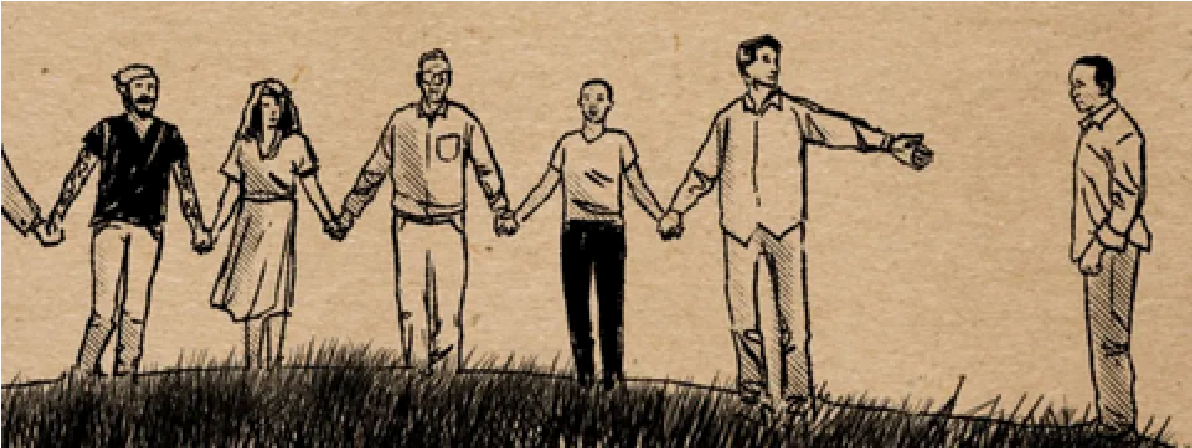
This is a challenging truth to embrace in the world we inhabit. Our societies are increasingly polarized—politically, economically, and ideologically. Once, we believed postmodern culture would bring in greater freedom for the individual; instead, we see new walls being built, new lines being drawn, and once again the painful question arises—"Are you with us or not?"
Yet this is not a new story. Human beings have always sought security in uniformity, comforted by what feels certain and familiar. In doing so, we often justify our positions while neglecting the dignity of others and overlooking the intricate interdependence of all creation. History reminds us that communities built on exclusion and sameness may appear strong for a time, but they inevitably wither. True community does not arise from gathering around our similarities but from laboring together across our differences.
In that light, our faith flourishes in the tension born of individuality and diversity. We share the same divine origin, yet each of us is uniquely created and called. This diversity is not chaotic or meaningless—it moves us toward the common good, aligning our hearts in the same direction and bearing fruit from the same Spirit.
As we approach the Week of Prayer for Christian Unity—from January 18th to 25th—let us pray that our Christian communities become living signs of hope. May our shared faith remind the world that difference is not a threat, but a testimony to God’s abundant goodness. It begins with gratitude—recognizing the unique gift of God within each of us.
How do you see yourself as a gift? How is that gift expressed in your prayers and in your daily actions? It need not be grand or extraordinary. Each moment of gratitude, gentleness, kindness, and openness allows your light to shine—reflecting God’s love into the world.
Fr. James
-
Location
Office Hours
Contact

