Salt and Light - SERMON

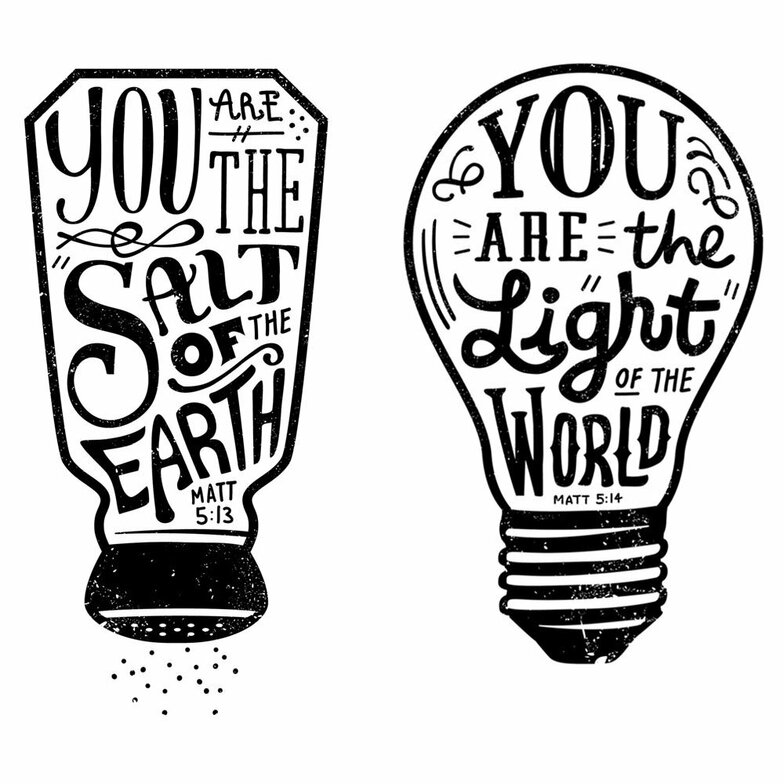
“You are the salt of the earth. You are the light of the world.” I don’t know how you find this statement, but for me, at first, it didn’t strike very strongly. In the context of our modern, Western culture, the message of this statement can feel diluted.
Think of it this way. In a grocery store, there’s an entire aisle filled with every kind of seasoning and salt imaginable. We even hear so much about low-sodium diet for the sake of our health such as our hearts, blood pressure, and kidneys. In this context, this analogy may not hit us the way it did to his followers in Jesus’ time. What about light? We flip a switch and our homes glow instantly. Power outages are rare, and darkness is easily dispelled. Light is everywhere, almost effortless.
But in Jesus’ time, the existence of salt and light were experienced in a more precious way. Did you know that salary in Latin word is salarium, which is derived from salt? As I looked deeper, in the Roman Empire, soldiers were given an allowance of salt as part of their pay. I also found an expression, “he aint’ worth a lick of salt”, which means, his job performance is so poor and it is not worth getting paid a single lick of salt.
It is not hard to imagine with the limitation of transportation, for the people who live remote from the sea, salt must have been certainly a rare commodity. On the contrary, it was necessary for many reasons. It was important not only for flavor and giving body essential mineral but also for preservation, especially when there was no refrigeration.
Light too had to be cared for and tended. An oil lamp required attention, oil refills, trimming the wick. It must have been quite ritualistic experience as people lit up a lamp. Watching a colorful, warm flame dancing and ascending, push back the darkness must have been comforting, even spiritual.
Although we may not experience the analogy of salt and light with more vivid connection, we all understand what Jesus meant by it. After all, the message from Jesus can be interpreted, “You are called to be and called to do something essential to the world.” Then what do you think is the most essential thing in today’s world?
Some may say compassion, or empathy, others may say tolerance, or humility. If we integrate all of these qualities, who would that be like? Recently, I read a Korean article titled “Living in a World with no adult-like adults.” The author lamented how, in our modern society, there are no longer mature adults in our society who nurture and guide others. It surely reflects more of Korean society as there is cultural crisis in disconnection between traditional values and modern influence,
But it may be true as we see the world troubled by people who do not act and live like adults. The author talks about the phenomenon in relation to modernization. In modern society, adults are not considered to be wisdom bearer anymore. The world has evolved around new technology, and we live in the overflowing waves of information. In the past, when someone was in trouble, they went to see the most experienced one, usually elders of the community to ask for advice.
However, in modern society, the elders are often put aside as everyone pursues to catch up the rapid changes. When we need to know how to solve a problem, Google or these days Chatgpt would give us all solutions even including relational or personal problems. People’s interest shifted from lived wisdom to quick answers. Furthermore, it’s not just because people stopped listening to elder’s wisdom, but also those wisdom disappeared where capitalistic individualism became dominant.
Under this influence, people only follow their individual desire and never get satisfied. Everyone is eager to gain what they want or need. You may have heard the saying, the irony of a human life is when you are young, you want to get older and when you are old, you want to get younger. In relation to the theme of world with no mature adult, this saying may imply that young do not have chances to learn to become a mature adult seeking only for autonomy, and elders as well only seeking for freedom, and do not put their time and efforts to discern the most valuable lessons in life from their failure or success and leave a lasting legacy for the next generation.
Regardless of age, not many wrestle with what it means to be a true adult or try to become one. So what does it mean to be a mature adult? We can name many on the list. Being responsible, being respectful, being reliable, being communicative, being purposeful.
As I reflect on Jesus who lived as a perfect example of being a mature human being, I think being a true adult can be explained in a simple way. Giving life to others. In other words, being a true adult means becoming food and soil for others to grow. It is not a quality found in an individual separately, but it is found in relationships. Being a good example of responsible person for others; Supporting others whose lives are troubled, guiding others who are lost, encouraging others who are on their journey, celebrating with others who accomplished something meaningful, accepting others where they are… and probably, all these echo with last Sunday’s Gospel.
In Beatitudes, Jesus blessed and assured those who were suffering or trying to restore their lives and others. In Jesus’ words, those who considered to be abandoned, hopeless, foolish are claimed to be blessed, because God cares about them. Certainly, Jesus fully embodied this nurturing, guiding, and protecting love and in Jesus, people came alive and restored. In our faith journey as well, we turn to Jesus when we need comfort, clarity, encouragement.
And now, in today’s Gospel, he invites us to be the same: “You are the salt of the earth. You are the light of the world.” This is more than a command. It’s a reminder of who we truly are, what God created us to be.
Then how can we be the salt and light, and what would it look like?
As we think of how the salt and light are used, the process involves change of self, in a form of giving up oneself. Salt that never leaves the shaker may still be salt, but it hasn’t fulfilled its purpose. Salt must dissolve to bring flavor and preserve food. Light works the same. A lamp sitting unlit remains in darkness. Only when its oil burns, it shines. Light transforms itself while giving up what it is so it can shine for others. Through this analogy, Jesus tells us, we must engage, give ourselves and make changes in our lives for others.
Then the change in us brings changes in others. Just as salt and light keep things vital and grow and glow, as we put ourselves for others, we see growth in others, changing the world in a better direction. But we all know it is not that easy to be like that. It requires commitment, discipline, but more than anything else, we need to experience that nurturing, protecting love first. As the saying, “a mother needs a mother too” goes, we can only possibly be the salt and light, when we are nourished and illuminated by someone. Some of us have been blessed with parents, mentors, friends who were present with maturity.
But for all of us, Jesus is with us here and now as the truest teacher and the most reliable companion. He gives himself so that we may find strength when we are weak, clarity when we are lost, and courage when we are uncertain. As we open our hearts to our Savior Jesus Christ who offered his whole self for us, let us pray that God’s love will change our lives so that we will also joyfully give ourselves to make others grow in faith, hope, and love.
Fr. James
-
Location
Office Hours
Contact

