9th Sunday after Pentecost

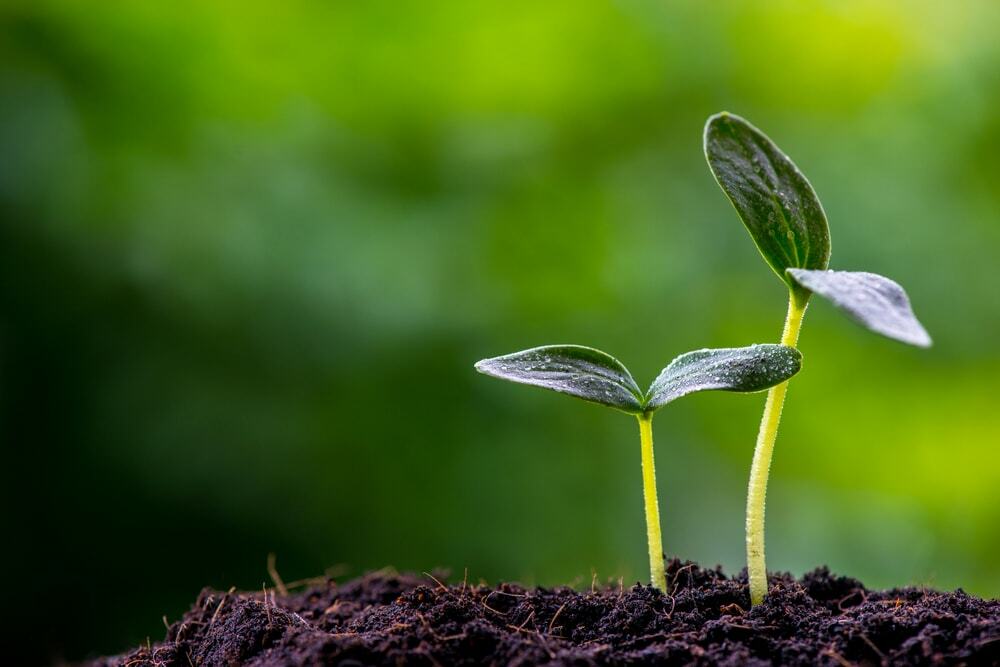
We’ve been hearing many parables related to the kingdom of heaven from Matthew’s Gospel for the past few weeks. Two weeks ago, we heard about good soil and soils that are not prepared to receive a seed. Last Sunday, we heard about good seeds mixed with weeds and how they will be separated at the harvest. As we reflect on these, we are reminded that the Good news brought by Jesus requires our openness and willingness to receive it, and there will be struggles coming both from within and from outside.
With these in mind, what stands out to me this Sunday’s gospel is more hopeful assurance of the greatness of God’s Kingdom. In the images of a mustard seed and the yeast, Jesus shows how something very small can lead to great growth and transformation. As we think of how the church, begun by Jesus, has grown throughout the world, this image feels very real.
And yet as I look around the world today, instead of good seeds and life-giving yeast, I often see more seeds of weeds spreading and mold and fungus infesting everywhere like wildfire. Hatred, negligence, selfishness seem to arise so easily. Think of the time you are insulted or hurt by someone. Our natural reaction would be to strike back. Even those who seem kind may speak poorly of them behind their backs. We talk about being generous and merciful as God is to us, but in our daily life, it is not that easy to live out what Jesus has taught us.
Meanwhile, the seed and yeast of good intentions can feel weak by comparison. We try to do something good for others, but Often times we get discouraged or exhausted and give up. It can make us wonder. Does evil have more power than good? But Jesus showed that nothing is stronger than love and he has conquered sin and even death.
As I reflect on this, I wondered that maybe what we believe good seeds or yeast is not genuinely good. I would like to call these disguised seeds. These look like good outside, but actually they are not so much different from weeds or even worse than that, since it can deceive us.
First, there is the seed of approval. Even when we serve humbly, there can be a quite desire to be noticed and praised. And when no one seems to recognize what we do, it becomes hard to continue
Second, there is the seed of fairness. We often expect that our kindness will be returned. We help someone in trouble willingly, but when we do not get any help in our own troubled time, either directly from the person we helped or from someone through God’s providence. We end up with bitterness and cynicism easily.
Third, there is the seed of control. At times, we have urge to manage the outcome. We tend to take charge of what we do, and often get sucked into it as if there is no one but us who can carry on. How many times you get caught up or overly occupied with what you do, while being overwhelmed and burdened by stress and worries.
All of these can look like good works, but as we examine them prayerfully, we will begin to see that the soil or seed are not genuinely good yet. It is similar to yeast. Even a slight change in the DNA of a yeast cell can cause it to develop harmful characteristics instead of safe and beneficial one.
Then how do we recognize a truly good seed? Probably I have shared somewhere sometime about a movie “Pay it forward”. In this movie, 12 year old boy named Trevor begins a movement of kindness as an assignment of his sociology class. The idea is simple. To make the world better, all it takes is doing a meaningful act of help to three people, a favor that the recipient needs but do not have means. And the recipient is asked to pay it forward to other three people instead of paying it back.
Such a simple plan, but we all know it is not easy to do, since often it comes with a cost, often we say sacrifice. As Trevor carries out his plan himself, he tragically loses his own life, but his plan becomes a movement changing people’s life and the community.
Both in that story and in the life of Jesus, love can look costly, even frightening. Yet, we do not have to worry about how we can do. But we are not asked to begin with great acts. It begins by planting ourselves in God. And as we grow into love of God, we will gradually yield the seeds that we can plant in others.
As we become more rooted in God, and less driven by our own ego, something changes within us. Gradually, we receive the wisdom and strength to live out genuine love. So the most important thing is to immerse ourselves in God’s love. We all know where we can find that love.
As we pause to listen to the words of God and let our hearts absorb those words of love for us,
As we gladly receive the body of Christ who receives us to himself,
As we pay attention to God’s creation where goodness and beauty are quietly but mysteriously manifested,
We know God has been reaching out to us, to touch us, to be touched by us, to walk the path with us, to guide us back to our Home.
On the website of Sistine Chapel, it gives a detailed information about the hidden meaning of Michelangelo’s painting of “Creation of Adam” Before we look closer, we assume the fingers of God and Adam is already touched, but while God’s finger is fully stretched out with determination and certainty, Adam’s finger seems loosely bent.
It implies God is always there, but the choice to seek Him and encounter with Him depends on us. As we ground ourselves in God, as we do plant the seed with God, we will begin to see the change.
Instead of seeking for approval from others, we will desire to give glory to God, the source of all good.
Instead of clinging to fairness, we will rejoice in others’ growth and restoration.
Instead of trying to control everything by ourselves, we will entrust our lives to God and know that God will continue to complete what we started.
And that is the quiet but powerful promise in today’s Gospel. The Kingdom of God is already at work, even when we cannot see it clearly. The seed may seem small, and the yeast may be hidden, but God is the one who gives the growth.
Our role is not to measure success or control the outcome, but to remain rooted in His love and to be faithful in the small acts of love placed before us each day. When we entrust even our smallest offerings to God, He will transform them beyond what we can imagine.
So let us not lose heart.
Let us continue to plant, to trust, and to hope, knowing that in God’s hands, nothing given in love is ever wasted.
-
Location
Office Hours
Contact

