Who is this one who has come?

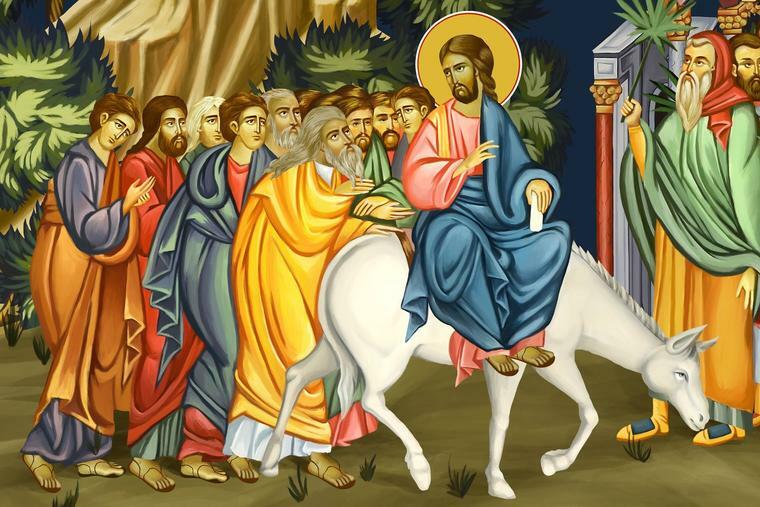
Mathew 21:1-11 & Philippians 2:1-11
We are beginning our journey into Holy Week. A week where we are invited to look upon the horror of the brutality and the injustice inflicted upon Jesus. Horrors that reveal the darkness and brutality that we as humans are capable of. Horrors, darkness and brutality that continue to be displayed daily on the news with the threat of spreading not receding. The uncertainty and the darkness and horrors we find on full display when it comes to people’s security and assurance of well being is not new. It’s what the first Christians experienced in their lives.
May our hearts be open this Holy Week and Easter to know our need to have what God has done for us in Christ be the foundation that our life is anchored to. To be the source of life that sustains our very being.
"I am the vine you are the branches" says Jesus.
We began this journey together focusing on the triumphal entry of Jesus into Jerusalem. Often this part of the story is just a prelude to our Palm Sunday service before we jump right into the passion of our Lord. But this Holy Week let’s start by spending a bit more time on the world changing event of Jesus' triumphal entry into Jerusalem. Then as the week progresses may we walk with Jesus in a way that invites us to see ourselves in the story that changed human reality. Not just history that we look out upon but our history, our future - our lives yesterday, today and tomorrow.
Jesus has been heading back to Jerusalem. He has been warned that it was no longer a safe place for him to go. He had so won the hearts of the people that he had become a threat to both the religious leaders and the political leaders of the time. As they said; "if they did not do something to stop him soon the whole world would follow him". Why would that be such a threat? Jesus was caring for people. Jesus was bringing wholeness and healing to people's lives in ways that they had never experienced before. Jesus was ushering in a whole new way of being with one another. Jesus was ushering in a whole new kingdom. A kingdom that was not coming alongside the structures and kingdoms of this world but was dismantling them. No longer were people stratified by their gender, their race, their family of origin, their financial status, their education, their employment, their physical abilities or lack there of. This was a kingdom not based on how much power you could obtain and hold on to and exercise. This was a kingdom whose foundation was the exact opposite. This was a kingdom built on loving your neighbour as yourself. A kingdom built on preferring one another in love. A kingdom where God's grace, God's love, God's mercy was the motivation for serving and acting. This kingdom could not be built upon the same foundation as kingdoms where some have more value then others. Where pleasing and serving self takes precedence over loving and caring for the other. This kingdom would change everything including the very foundation your life had been built on.
Jesus has just come from Bethany where he has called Lazarus back from the grave. Death the great human equalizer that none of us are immune to no matter how much power or privilege we may have obtained in life obeyed his voice and Lazarus returned to his body and to his life in this world. Jesus has left Bethany and the great celebration taking place because of Lazarus and come to Jerusalem. The centre of Jewish history. Occupied and controlled by the Roman Empire.
As an infant Jesus was taken to the temple to be dedicated. When he was twelve he went there with his family and others for a pilgrimage and engaged the elders in challenging theological debates. As an adult he had been in and around Jerusalem. But this time his visit is different. Jerusalem has been under Roman rule and filled with power struggles since he took his first breath as a human.
The gospel writers all tell us that while travelling and teaching and healing and embracing people he was constantly trying to avoid drawing attention to himself and avoid being held up as a king or leader of this oppressed people who longed to be free from their oppression and isolation and fear. This time however he sets the stage to concretely and visually fulfill scripture, to fulfill what the prophets have said and enter into the full symbolism and proclamation of a King. A king with power and authority and the adoration and praise of the people, but a king who is humble and gracious and loving and caring and willing to lay his life down so that others may have life.
The people are ecstatic. There is hope. Hope that their lives will become different. Hope that their oppression will cease and that they will be free to live life to the fullest. They wave branches in adoration and proclaim Hosanna in the highest heaven. They are proclaiming save us we pray One who is from the highest heaven.
They are looking to Jesus for their life to be renewed. When he entered Jerusalem it says the whole city was in turmoil. This did not go unnoticed. People were asking who is this? That is the ultimate question. Who is this one who brings healing to those who are sick. Who gives sight to the blind. Who takes the hand of those who cannot walk and lifts them up. Who takes children into his arms and tells all those struggling for identity and power and freedom if they really want to be great and full of life they must become like a child. Who sits down and eats and becomes intimate friends with the outcasts and the hated. Who looks out at a ranging storm and says cease and it listens. Who calls the name of a man who has been in the grave for four days and the man comes out of the grave and back to life. Who is this one who weeps with those who are weeping and rejoices with those who are rejoicing.
We read a description of him in the letter to the Philippines. This description might be one of the oldest proclamations ever said about Jesus. It is a song or a creed that those who met him and knew him wrote about him and that Paul is quoting in his letter.
We are exhorted to "not look to our own interests but the interests of others. To let the same mind be in you that was in Christ Jesus. Who though he was in the form of God, did not regard equality with God as something to be exploited. But emptied himself, taking the form of a slave, being born in human likeness. And being found in human form. He humbled himself and became obedient to the point of death—even death on a cross." The one with all power and authority and wisdom emptied himself to reveal the depth of his love and his grace and his mercy to us. He humbly rides into Jerusalem, the rightful and glorious King of heaven and earth on a donkey inviting us to surrender to him and to do to one another what he has done for us. "If then there is any encouragement in Christ, any consolation from love, any sharing in the Spirit, any compassion and sympathy............be of the same mind, having the same love, being in full accord and of one mind. Do nothing from selfish ambition or conceit, but in humility regard others as better than yourselves. Let each of you not look to your own interests, but to the interests of others, let the same mind be in you that was in Christ Jesus."
May our hearts and minds be open to see the glory of God and the endless fountain of the love of God as we walk with Christ our Lord this week in the darkness of his suffering and as he walks with us in the darkness of our suffering.
The Ven. Allan Carson
-
Location
Office Hours
Contact

