Third Sunday of Easter - SERMON

There is something so precious about a child. Especially when we see how they perceive and engage with the world with no prejudice or calculation, there is purity in their gaze, freedom in their trust. Their innocence makes us smile, and perhaps even awakens something within us that we have long forgotten.
When we see a child waiting for Santa Claus or the Tooth Fairy, no one thinks they are foolish or gullible. Rather, we recognize that they are untouched by the weight of the world. And instinctively, we feel that such innocence must be protected, and cherished.
In the film Life Is Beautiful, a Jewish Italian father, facing the horrors of a concentration camp, creates a story for his young son, that everything is part of a game. Through imagination and love, he shields his son from too painful reality. Similarly, in many Korean dramas or novels set in the 1970s or 80s, when families were still rebuilding their lives for decades after the Korean War we often see a scene where a parent watches their child eating a rare and special meal, perhaps a piece of meat. When the child asks, “Why aren’t you eating?” and the answer is something like, “I’m already full,” or “I don’t like that dish.” But we know the truth. There is simply not enough.
We try to give our children only the best, so that their fragile but beautiful innocence will be protected. It is heartbreaking to see a child forced to think and live like an adult because no one allowed them to remain a child. And yet, we also know that there comes a time when we must grow up. No one cannot stay in Never-land like Peter Pan.
It is equally troubling to see an adult who refuses to grow, who clings to self-centeredness as though they alone matter. So what does it mean to become an adult? When does that change happen? There may be many ways to answer, but I would offer two.
First, an adult learns to see the complexity of life and to live within its tension. Truth is simple but when it is embodied in real life, it rarely is simple. Many times, we cannot divide evenly into right or wrong, yes or no. As we grow, we begin to see how contradicting things are intricately connected; ending and new beginning, hatred and love, life and death, fortune and misfortune,
Behind what we see, things are mysteriously intertwined waiting to be revealed. We come to recognize that there is something greater than ourselves, something we cannot fully understand or control, yet luring us, guiding us, challenging us to accept. And in that recognition, we learn humility and trust .
Second, I have shared this many times, an adult becomes other-centered. A child often asks, “What about me?” It is a necessary question for them, a way of seeking love and belonging. But maturity changes us to ask a different question: “What about others?” Some people grow older without ever making that shift. Everything remains centered on themselves, leaving little room for others to flourish.
We can see, even in our world today, what happens when such childlike self-centeredness holds power. Others are no longer seen as people, but as objects or tools to be used, or obstacles to be removed. And when things do not go their way, the response is something like a tantrum. In contrast, true maturity is marked by the joy of nurturing others, of restoring what is broken, of creating space where life can grow. As I reflected on today’s Gospel, these images of the innocent child and the mature adult came to mind.
Many in Jesus time, were hungry, hungry for food, hungry for justice, hungry for dignity, hungry for peace. Ordinary people’s lives were stripped, constrained, but they did not have ways to make changes. When Jesus came proclaiming the good news, he gave what they were hungry for. And I imagine Jesus looking upon them with deep delight, like a parent watching children come alive again after illness, enjoying their meal on the table. As they received God’s love-filled message through Jesus’ personhood and ministry, they regain the innocence as children of God.
And then, suddenly, they lost him. The one who protected them, nourished them, taught them, and walked beside them - gone. Taken, crucified, and seemingly defeated without even fighting back. It must have been a moment filled with fear, grief, confusion, and perhaps even a sense of anger from being abandoned.
Then came whispers of something impossible, that he was alive. That he had been seen. But there was no proof as we would expect today—only stories, fragile and uncertain, carried by human voices. It must have been both hopeful and bewildering.
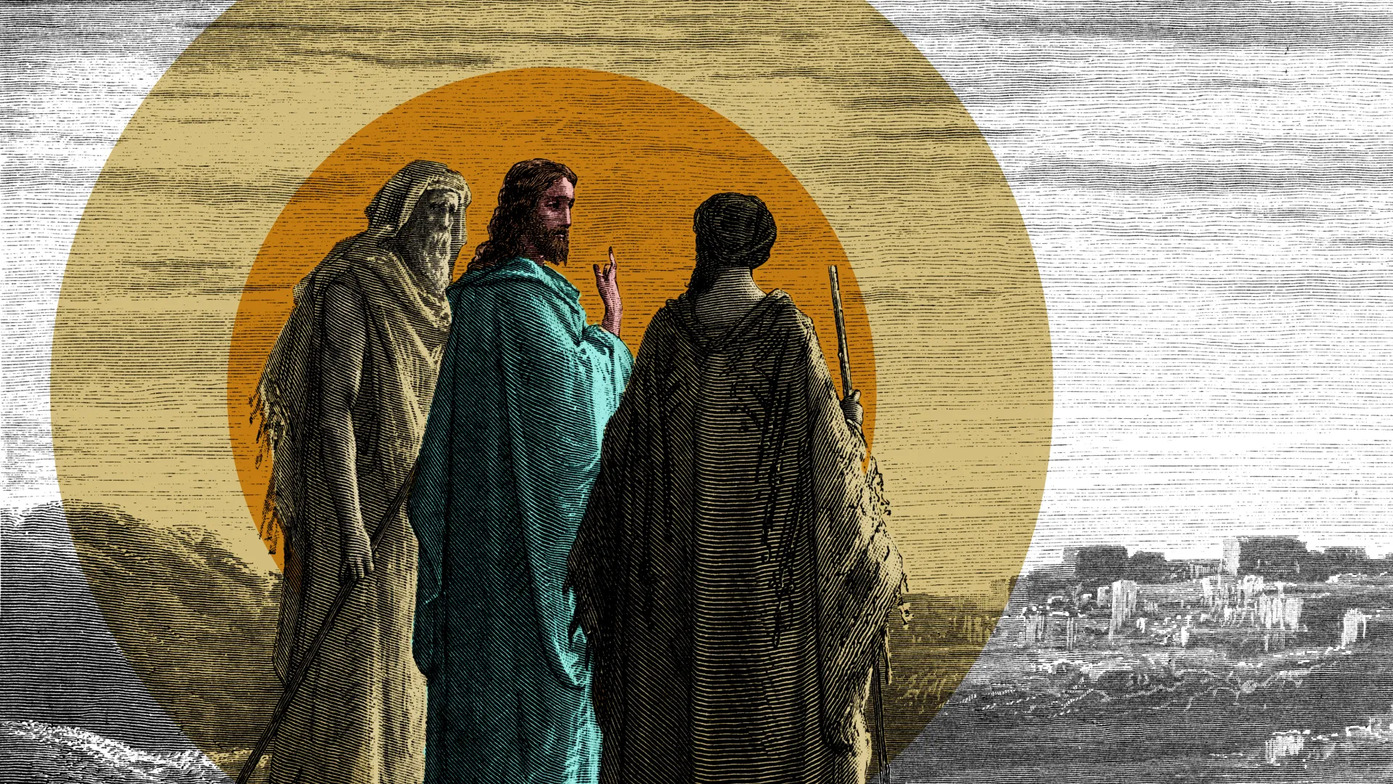
So they began the journey home with heavy hearts, carrying broken hopes and unanswered questions. And there, on that ordinary road, Jesus came to them. He walked with them—not like a stranger who interrupts, but as a companion who listens. And then he began to speak, opening the Scriptures to them, weaving together the story of God’s ancient promise with their stories of real life, clearing out their confusion and doubts.
He helped them see that his suffering was not a failure, but part of a greater fulfillment of a love that goes all the way, even through death. And when he sat at table with them, and broke the bread, as he had done so many times before, their eyes were opened. In that simple, familiar act, they recognized him.
Earlier this week, during our midday prayer and Bible study, we reflected on this very question: why did they not recognize Jesus at first? And what finally opened their eyes? It is an intriguing question, but also a deeply relatable one for us as well. Because we, too, often fail to recognize God’s presence. We miss God’s voice in the noise of our lives, God’s face in the people around us, God’s touch in the ordinary moments. And yet, there are times unexpected, unplanned, when something shifts. And suddenly, we see, we begin to understand the goodness, beauty and truth of God.
Perhaps that is the moment when we begin to turn from a child, the bearer of innocence, to an adult, the protector of innocence. Then we share the wisdom and truth with Jesus that we are not alone, but we are part of a bigger world that we are given a meaning and purpose of our lives, that our presence and choices matter to the world, and to God that what Jesus has done for us is God’s calling for us to live out.
Then, we are not anymore only a child to be protected, but also, we become true children of God, who knows Father, who lives as Father’s will. We not only recognizing Jesus who breaks the bread for us, but we know what it meant for us. Through this awakening, this quiet transformation, the disciples who once believed they had lost their shepherd, rise and begin again. And this time, they themselves become shepherds: bearers of love, witnesses of hope, and companions to others on the road.
And we too are on the same journey. As we walk our own path, the same Jesus listens to us, talks to us, and walks with us, breaks bread for us. So we pray.
Gracious and risen Lord, open our eyes to recognize you in our midst, and lead us to grow into faithful children who live and share your love in the world.
Fr. James
-
Location
Office Hours
Contact

