Earth Day - Reflection

The other day, I stumbled upon a YouTube video of Arlene featuring David Suzuki. I learned that David Suzuki is a well-known Canadian scientist and environmentalist (many of you likely already know him). He co-founded the David Suzuki Foundation in 1990 and has spent over 60 years educating the public about environmental issues, climate change, and sustainability.
In this conversation, he spoke about how we are all deeply connected to nature, and how our economic systems and capitalistic culture often leave little room for us to truly coexist with it. We may not live with a constant awareness of this connection, but if we pause for a moment and consider all that we need, we realize that not one of us can exist even a single moment without the natural world. We need nature, and we are part of it.
During the conversation, something David mentioned gave me fresh insight. He spoke of how much he appreciates the innocence of children. As he has grown older, he admits that he can become weighed down by problems, by a pessimistic view of the future, and by frustration at people’s indifference. And I guess it may be true for many of us. We hear so much about the world’s problems and we can easily feel overwhelmed or even hopeless.
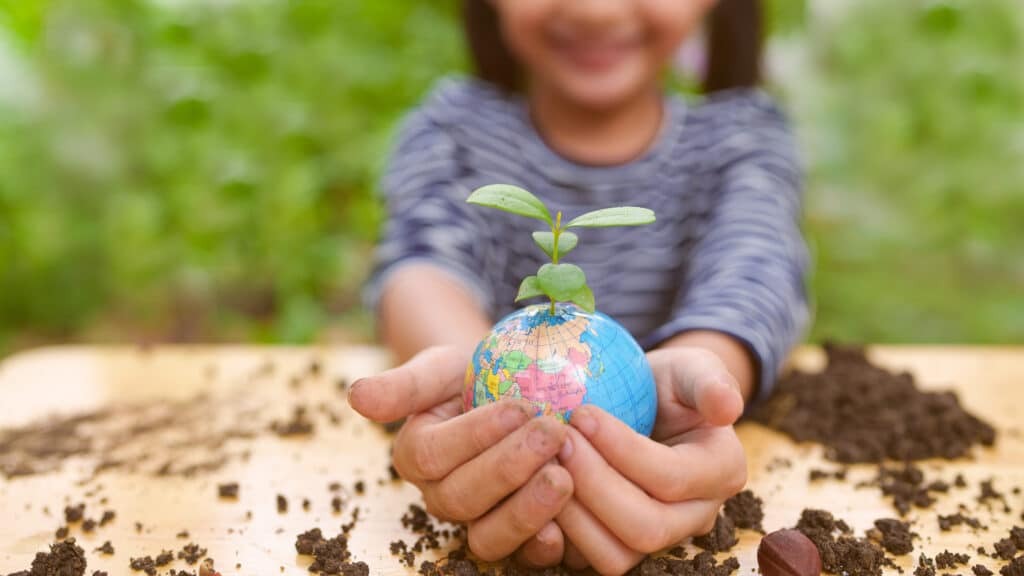
But children, he said, connect with nature instantly. They are filled with wonder. They are not preoccupied with what is broken, but are captivated by what is beautiful. I remember my own childhood; spending hours chasing dragonflies, inventing games with stones, building mountains in the sand, and creating stories in the midst of nature. As David said, nature always remains as an incredibly magical place, yet we so often forget this.
It is true that there are real and serious problems threatening our earth. We analyze them, measure them, and name them as environmental crises. We remind ourselves of the consequences along the trajectory we are on. These are important and necessary efforts. And yet, I found myself wondering. Perhaps this is not only a problem to fix.
Of course, we need nature to survive, and we carry a responsibility to pass it on to future generations. But we must not forget how to receive it as a gift. The reason we protect creation is not only because we depend on its resources, but because creation itself speaks of God’s goodness and beauty.
All created beings exist not as objects to possess, but as gifts to encounter. And perhaps creation becomes most fully itself, not when we control it, but when we enter into relationship with it.
On this Earth Day (April 22), maybe we are invited not only to act, but also to rediscover wonder and creativity. To slow down. To notice. To give thanks. Perhaps we can learn again from children how to see with fresh eyes, to delight in what is before us, and to remember that we are not separate from creation, but part of it.
And in doing so, we may find that caring for the earth is not only a duty, but a form of prayer, a way of honoring the Creator through the joy of being connected to all that has been made out of God’s love.
Fr. James
-
Location
Office Hours
Contact

