Entitlement Culture - SERMON

Oct 4th 19th Sunday after Pentecost
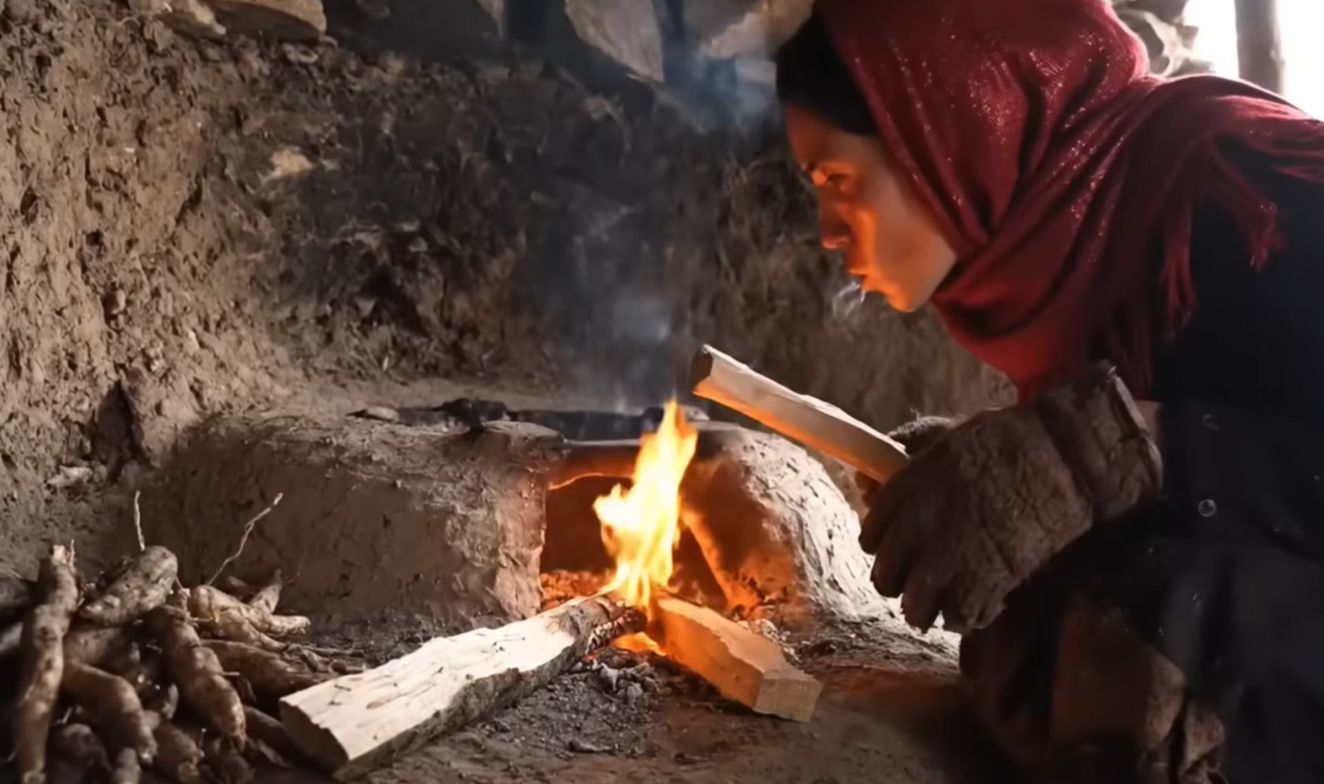
The other day, I stumbled upon a YouTube video featuring life in Yakutia. It is a region in northeastern Siberia, where temperatures can drop below −70°C. The video follows a day in the life of Alina, a 22‑year‑old woman living alone in a remote village. She has to keep the wood‑burning stove going 24/7; otherwise, the pipes will freeze and crack. To get water for drinking and washing, she melts harvested ice blocks or snow from outside.
There is no washing machine or dryer; she hangs clothes outdoors to dry. There is only one grocery store in the village, and she walks there for necessities, which are mostly canned goods, since fresh groceries are too expensive. Her whole day is a continuation of hard work just to maintain ordinary routines. Of course, she gets help from the village for certain things she cannot do alone, such as harvesting ice blocks from the frozen river, but she still must keep working to manage her household on her own.
By contrast, I was watching the video with the heating kicking in as the weather got chilly, contemplating whether I would need a new washer since mine seemed too old, or complaining about too many chores to do after coming home. I know we cannot simply compare our problems with others’, and it is not fair to assume that people with less are unhappy, or that we should be happy just because we have more.
A person’s story should be understood in their own context, through their own stories; sometimes we are surprised by a resilience we did not know existed, and at other times by stresses and challenges we cannot imagine. Yet, Alina’s story made me think about a sense of entitlement.
I once read an article related to “entitlement culture”. As the word suggests, it describes a personal or a collective tendency where people avoid accountability while expecting special treatment, carrying around an inflated sense of self‑importance. In a nutshell, it is a mentality in which people think they deserve something simply because of who they are, regardless of whether they have earned it.
We may think this is something observed mostly among young people these days, but actually, no one is entirely free from this mindset.
We are not fully aware of what has been granted to us, even when we did not actually own it or earn it. At times, when unexpected troubles shake our lives, or when we hear stories like Alina’s, we realize that what we took for granted is not something we own, nor is it given to everyone. This brings a new perspective on ourselves and on others, with more appreciation.
Let’s look at today’s Gospel through the lens of entitlement. The parable may sound far‑fetched at first glance. A landowner leased his vineyard to tenants; when harvest came, he sent his slaves to collect the produce. But the tenants mistreated the slaves one after another, refusing to give back what belonged to the owner. Finally, the owner sends his own son, assuming at least they would respect him, but they kill him instead, thinking they could take over the land.
We all know what this parable is about. The vineyard represents the people of Israel. The tenants are the leaders and teachers of Israel, who were supposed to guide and protect God’s people through the Law and Temple worship. The slaves are the prophets whom God sent, and whom the leaders and teachers mistreated and abused. And we all know who the son represents.
Of course, this story warns the leaders and teachers of Jesus’ time to stop abusing their authority and knowledge, pushing people away and stepping on them to stand high. But as we reflect on ourselves, we are not so safe from Jesus’ warnings. Think of who the Pharisees and Sadducees were. They were not evil ones; to the contrary, many of them were dedicated to abiding by the Law and revering God with sincerity. The only problem they had, in Jesus’ eyes, was that they claimed something that is not theirs as their own. They were so trapped in thoughts like: “I am right and they are wrong”; “I am good and they are bad”; “Therefore, those people do not deserve to belong to us.” And for them, Jesus’ approach to sinners and the marginalized at that time was a scandal and blasphemy.
We may think this is only what happened 2000 years ago. But as we examine the way we judge others, or even judge ourselves, we can be deceitful in believing that we are entitled to make that judgment. People with problems, issues, different appearances, or stuck in vicious patterns, we often forget the face of the person behind what they present. At times, those harsh judgments lay a heavy burden on others rather than helping them.
Other times, the sharp edge can be aimed at ourselves. When we fail, fall, or do not win, we consider ourselves failures and lose hope. How is this related to a mindset of entitlement? In the letter to the Corinthians, Paul makes a bold statement: without love, we are nothing. Yes, indeed, we always think we are something, or we should be something, but as Paul says, we are nothing without God’s love. This is not to belittle ourselves or push us down into humiliation. This statement is meant to help us become truly who we are. It puts everything back to where it belongs; loving relationship within God.
Let’s think about what happens we make a judgement outside our relationship with God. As we begin to think we are special because of what we have or what we believe we have accomplished, then we see others who do not have the same as “not good.” Or if we think we need to gain more, do more, to be special, we do not see ourselves the way God sees us.
Does this mean that we cannot tell good from bad, right from wrong? Of course we can. But it is not ours. We should know it belongs to God, and we learn how to see, act accordingly from Jesus. And through many stories and teachings, Jesus tells us that knowing good/bad, right/wrong are meant to foster relationships, bring life to the world. Instead of talking only about an individual’s good/bad or right/wrong, we are invited to discern what makes for good relationships, right relationships, with God and with one another. In the narrative of original sin, sin is sin because it breaks the relationship with God and with one another.
In this sense, entitlement is not just found in a child who thinks they can do whatever they want; it is also present when we think, “I can be right, I can be good” outside the context of relationship, since we turn what belongs to God into something that is ours. Then we cannot grow; rather, we lay burdens on others or even on ourselves. “Without love, we are nothing.” In other words, because of God’s love, we are fully who we are here and now.
We are at the right moment, in the right place, to fully encounter God and to enter in to a genuine relationship with one another. Lord Jesus, you are the true Owner of the vineyard and the beloved Son who gave your life for us. Free us from the spirit of entitlement that makes us claim what is yours as our own, and that leads us to judge others or even ourselves without love. Teach us to see every person as you see them, and to use every gift, insight, and strength in the service of right relationship with you and with one another. May your love be the measure of our thoughts, words, and deeds, so that in your love we become fully who you created us to be.
We ask this through Christ our Lord. Amen.
Father James
-
Location
Office Hours
Contact

